


Blog
Acupressure Massage for Twitching of the Eyelids

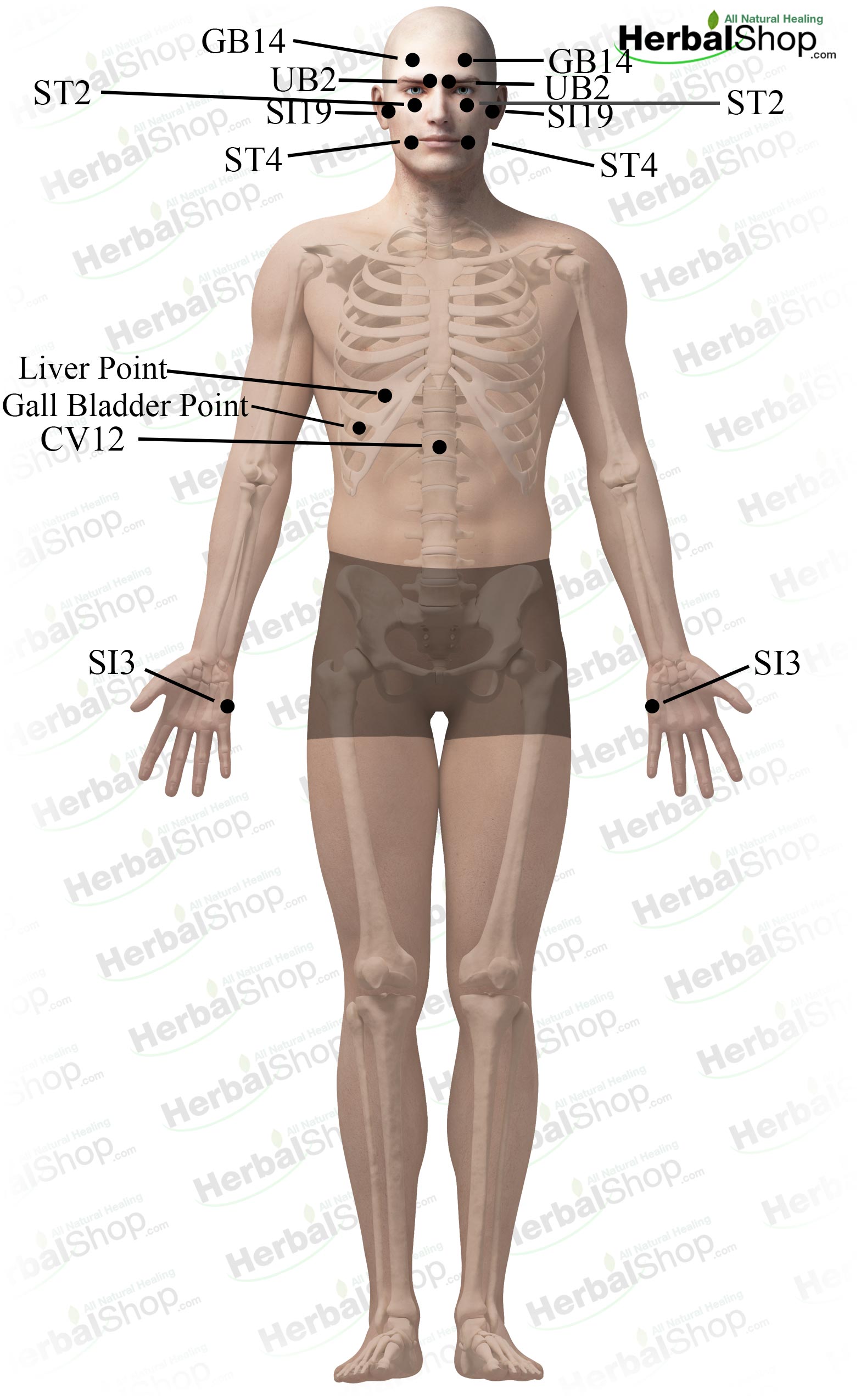 These are the acupressure points for twitching of the eyelids. Working on these points can help you get better faster. You do not have to use all of these points. Using just one or two of them whenever you have a free hand can be effective.
Acupressure Point GB14 — Yang Bai
Chinese Name: 陽白
Location: with the tip of your index finger probe the area directly up from the pupil of the eye when looking straight ahead, approximately one finger-width above the eyebrow, until you feel a slight dip.
Traditionally used for: headache in the frontal area, pain in and above the eyes, twitching of the eyelids, drooping of the eyelids.
Acupressure Point SI19 — Ting Gong
Chinese Name: 聽宮
Location: anterior to the tragus and posterior to the condyloid process of the mandible, in the depression formed when the mouth is open.
Traditionally used for: deafness, tinnitus, ear infection, toothache, t.m.j. Pain.
Acupressure Point UB2 — Zan Zhu
Chinese Name: 攢竹
Location: on the medial end of the eyebrow, above the inner canthus.
Traditionally used for: headache, blurred vision, failing vision, pain in the supraorbital region, tearing of the eyes, redness of the eyes, swollen eye, pain in the eye, twitching of the eyelids.
Acupressure Point ST2 — Si Bai
Chinese Name: 四白
Location: One finger width below the lower ridge of the eye socket in line with the center of the iris in an indentation of the cheek.
Traditionally used for: redness and pain of the eye, twitching eyelids, near sightedness, far sightedness, headaches, vertigo, face-lift point. Remedies acne and facial blemishes.
Acupressure Point ST4 — Di Cang
Chinese Name: 地倉
Location: lateral to the corner of the mouth.
Traditionally used for: deviation of the mouth, salivation, twitching of the eyelid, mutism, myopia, facial palsy, to reduce fat in the thigh.
Acupressure Point CV12 — Zhong Wan
Chinese Name: 中脘
Location: midway between the belly button and the bottom of the breastbone. On the midline of the abdomen, 5 finger width above the belly button.
Traditionally used for: acute abdominal pain, pain due to overeating, gastric pain, sour stomach, belching, regurgitation, vomiting, diarrhea, dysentery, distention of the abdomen due to flatulence, hiatal hernia.
Acupressure Point Liver Point
Location: on the right side, 2 body inches lateral to cv12, on the lower border of the rib cage.
Traditionally used for: vomiting, abdominal bloating, diarrhea, indigestion, pain in the hypochondriac area.
Acupressure Point Gall Bladder Point
Location: on the right side, 1 inch lateral to NAET liver point, on the lower border of the rib cage.
Traditionally used for: one sided migraine headaches, frontal headache, blurred vision, hay-fever, twitching of the eyelids, twitching of any part of the body, nasal obstruction, red and painful eyes, fat intolerance, clay colored stool, gall stone pain.
Acupressure Point SI3 — Hou Xi
Chinese Name: 後溪
Location: when a loose fist is made, this point is close to the head of the 5th metacarpal bone on the ulnar side.
Traditionally used for: headache, stiff neck, intracranial pressure increase, weakness of the eye muscles, pain in the eyes, red eyes, pressure in the eyes, deafness, ringing in the ears, fever, weakness of the arm muscles, twitching of the elbow, arm and fingers, spasms of the upper back muscles, upper backache, night sweating
,
Caution: You should consult with a healthcare professional before practicing Acupressure or starting any diet, exercise, Chinese herbs or other supplementation programs.
Acupressure is self-care, not a replacement for diagnosis or treatment. Stop if you feel sharp pain, numbness or dizziness. Pregnant or trying to conceive? Skip LI4, SP6, GB21, BL60 and BL67 unless your practitioner directs it. Get medical care first for chest pain, sudden weakness, fainting, heavy bleeding, or a high fever.
