


Blog
Acupressure Massage for Failing Memory

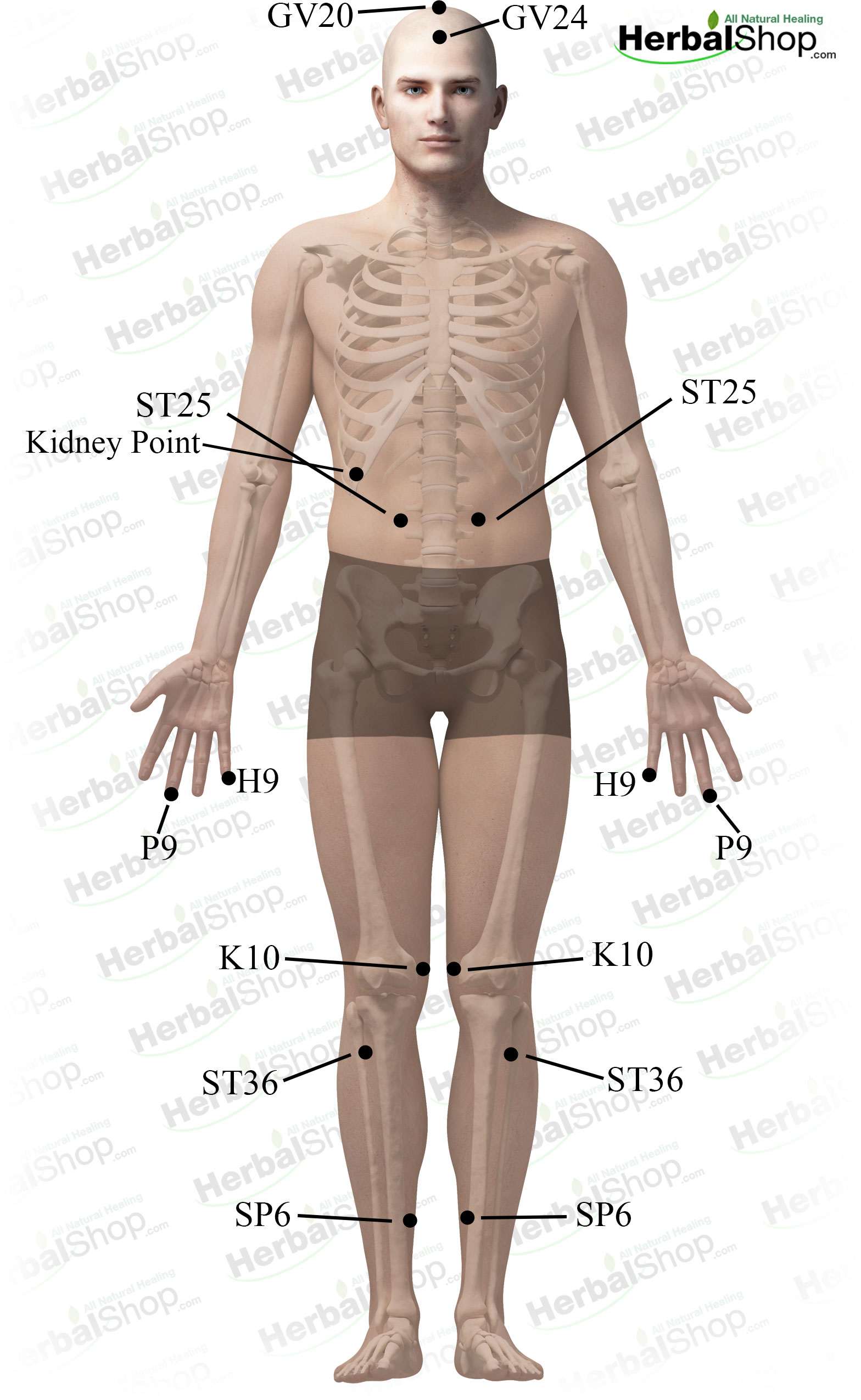
 These are the acupressure points for failing memory. Working on these points can help you get better faster. You do not have to use all of these points. Using just one or two of them whenever you have a free hand can be effective.
Acupressure Point GV20 — Bai Hui
Chinese Name: 百會
Location: center of the top of the head where the line connecting the high points of your ears crosses the body midline until you feel a slight dip.
Traditionally used for: headache on the top of the head, dizziness, insomnia, poor memory, hot flashes, good for memory and concentration, ringing in the ears, blurred vision, nasal obstruction, low energy, prolapse of the rectum.
Acupressure Point GV24 — Shen Ting
Chinese Name: 神庭
Location: on the midline, at the junction of the forehead and the hairline. Directly between your eyebrows in the indentation where the bridge of the nose meets the center of the forehead.
Traditionally used for: frontal headaches, pressure headaches, anxiety, palpitation, insomnia, vertigo, blocked sinuses, failing memory. Stimulates the pituitary gland, which is the master endocrine gland, to enhance the condition of the skin throughout the body.
Acupressure Point Kidney Point
Location: 9 body inches below the axilla in the mid axillary line.
Traditionally used for: flatulence, diarrhea, abdominal bloating, pain in the lower back.
Acupressure Point ST25 — Tian Shu
Chinese Name: 天 樞
Location: 3 body inches lateral (to the side) to the center of the belly button.
Traditionally used for: abdominal pain, diarrhea, dysentery, constipation, gurgling sound in the abdomen due to flatus, abdominal bloating, fullness, pain around the belly button, water retention in the abdomen, irregular menstruation, premenstrual disorders (PMS)
Acupressure Point P9 — Zhong Chong
Chinese Name: 中沖
Location: in the center of the tip of the middle finger.
Traditionally used for: irritability, febrile diseases, stiffness of the tongue, unusually warm palms and soles, poor memory, shortness of breath.
Acupressure Point H9 — Shao Chong
Chinese Name: 少沖
Location: on the radial side of the little finger, at the corner of the nail.
Traditionally used for: heart palpitation, pain in the chest and hypochondriac region, poor memory, shortness of breath.
Acupressure Point GB19 — Nao Kong
Chinese Name: 腦空
Location: directly above GB 20, on the lateral side of the external occipital protuberance.
Traditionally used for: headache, stiffness of the neck, vertigo, painful eyes, tinnitus.
Acupressure Point GB20 — Fen Chi
Chinese Name: 風池
Location: below the base of the skull, in the hollow between the two large, vertical neck muscles, two to three inches apart depending on the size of the head.
Traditionally used for: occipital headache, dizziness, pain and stiffness of the neck, pain in the shoulder, fever, common cold, whiplash, weakness of the whole body.
Acupressure Point UB43 — Gao Huang Shu
Chinese Name: 膏肓俞
Location: 4 finger width lateral to the spinous process of the 4th thoracic vertebra.
Traditionally used for: cough, asthma, blood in the sputum, night sweating, poor memory, indigestion, emphysema, chronic fatigue syndrome, low energy.
Acupressure Point K10 — Yin Gu
Chinese Name: 陰谷
Location: when the knee is flexed, the point is on the medial side of the popliteal fossa, between the tendons of m. Semitendinosus and semimembranosus, level with UB 40.
Traditionally used for: hernia, uterine bleeding, pain in the knee, hair loss.
Acupressure Point ST36 — Zu San Li
Chinese Name: 足三里
Location: Four finger widths below the kneecap toward the outside of the shinbone.
Traditionally used for: Strengthens the whole body to prevent as well as relieve allergies. long life point, balancing point, to boost up energy, knee pain, gastric pain, vomiting, abdominal distention, diarrhea, constipation, dizziness, mental fog, arterial sclerosis, poor digestion especially of proteins and carbohydrates, breast abscess, mastitis, pain and swelling in the breast.
Acupressure Point SP6 — San Yin Jiao
Chinese Name: 三陰交
Location: On the inside surface of the leg, four fingers-width above the inner anklebone.
Traditionally used for: balancing point, abdominal distention, loose stools with undigested food, irregular menstruation, uterine bleeding, amenorrhea, low mood, chronic fatigue, regulate hormone function, low sexual desire in men and women, pain in the external genitalia, warts, hemorrhoids, varicose veins, insomnia, PMS, hot flashes, cold limbs.
Caution: You should consult with a healthcare professional before practicing Acupressure or starting any diet, exercise, Chinese herbs or other supplementation programs.
Acupressure is self-care, not a replacement for diagnosis or treatment. Stop if you feel sharp pain, numbness or dizziness. Pregnant or trying to conceive? Skip LI4, SP6, GB21, BL60 and BL67 unless your practitioner directs it. Get medical care first for chest pain, sudden weakness, fainting, heavy bleeding, or a high fever.
