
Blog
Acupressure for Calm and Circulation


 Here are the acupressure points traditionally used for calm and circulation. Use gentle, regular pressure, and give it time. You do not have to use all of these points. Using just one or two of them whenever you have a free hand can be effective.
Acupressure Point K9 — Zhu Bin
Chinese Name: 築賓
Location: at the lower end of the muscle gastrocnemius in the medial aspect, 7 finger width above the tip of the medial malleolus.
Traditionally used for: pain in the medial aspect of the leg, poor water metabolism, water retention, blood poisoning, high creatinine in the blood, high urea nitrogen, high sodium intake, syphilis, chemical toxemia, mental fog, poor memory.
Acupressure Point GV20 — Bai Hui
Chinese Name: 百會
Location: center of the top of the head where the line connecting the high points of your ears crosses the body midline until you feel a slight dip.
Traditionally used for: headache on the top of the head, dizziness, insomnia, poor memory, hot flashes, good for memory and concentration, ringing in the ears, blurred vision, nasal obstruction, low energy, prolapse of the rectum.
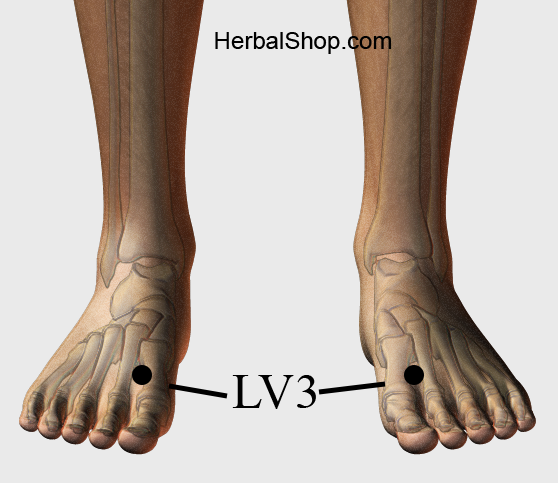
Acupressure Point LV3 — Tai Chong
Chinese Name: 太沖
Location: in the depression distal to the junction of the 1st and 2nd metatarsal bones.
Traditionally used for: balancing point, low energy, uterine bleeding, PMS, retention of urine, abdominal distention, fever, diarrhea, headache, chemical toxicity, anger, bleeding from the stomach, bleeding from the eyes, mouth, mucus membrane, poor circulation.
Acupressure Point LI11 — Qu Chi
Chinese Name: 曲池
Location: On the top, outer end of the elbow crease. bend your arm, press your thumb into the hollow located on the top, outer end of the elbow crease, directly above the elbow, between the elbow joint (below) and the muscle (above).
Traditionally used for: food allergy, hives, vomiting, diarrhea, dysentery, fever, sore throat, pain in the elbow and arm, tennis elbow, particularly inflamed skin disorders (such as hives and rashes), itching, fevers.
Acupressure Point LI4 — Hoku
Chinese Name: 合 谷
Location: At the highest spot of the muscle on the back of the hand that protrudes when the thumb and index finger are brought close together. Midway between the thumb and index finger approximately one body inch above the web.
Traditionally used for: Relieves pain and inflammation in the hand, wrist, elbow, shoulder, neck. Headache, red eye, pain in the eye, nose bleed, toothache, sore throat, facial swelling, fever, abdominal pain, constipation, delayed menstrual cycles, absence of menstruation in fertile women without pregnancy, PMS, delayed labor, to balance the energy in the body
Acupressure Point ST36 — Zu San Li
Chinese Name: 足三里
Location: Four finger widths below the kneecap toward the outside of the shinbone.
Traditionally used for: Strengthens the whole body to prevent as well as relieve allergies. long life point, balancing point, to boost up energy, knee pain, gastric pain, vomiting, abdominal distention, diarrhea, constipation, dizziness, mental fog, arterial sclerosis, poor digestion especially of proteins and carbohydrates, breast abscess, mastitis, pain and swelling in the breast.
Acupressure Point LV5 — Li Gou
Chinese Name: 蠡溝
Location: 7 finger width above the tip of the medial malleolus on the medial border of tibia.
Traditionally used for: chemical and environmental toxicity, chronic fatigue syndrome, irregular menstruation, PMS, fibromyalgia, dysuria, low energy, retention of urine.
Acupressure Point Ex-HN — Anmian
Chinese Name: 安眠
Location: approximately 1 body inch anterior to GB 20.
Traditionally used for: insomnia, vertigo, headache, palpitation, hyperactivity, mental irritability.
Acupressure Point GB20 — Fen Chi
Chinese Name: 風池
Location: below the base of the skull, in the hollow between the two large, vertical neck muscles, two to three inches apart depending on the size of the head.
Traditionally used for: occipital headache, dizziness, pain and stiffness of the neck, pain in the shoulder, fever, common cold, whiplash, weakness of the whole body.
Caution: You should consult with a healthcare professional before practicing Acupressure or starting any diet, exercise, Chinese herbs or other supplementation programs.
Acupressure is self-care, not a replacement for diagnosis or treatment. Stop if you feel sharp pain, numbness or dizziness. Pregnant or trying to conceive? Skip LI4, SP6, GB21, BL60 and BL67 unless your practitioner directs it. Get medical care first for chest pain, sudden weakness, fainting, heavy bleeding, or a high fever.