


Blog
Acupressure Massage for Dryness of the Mouth

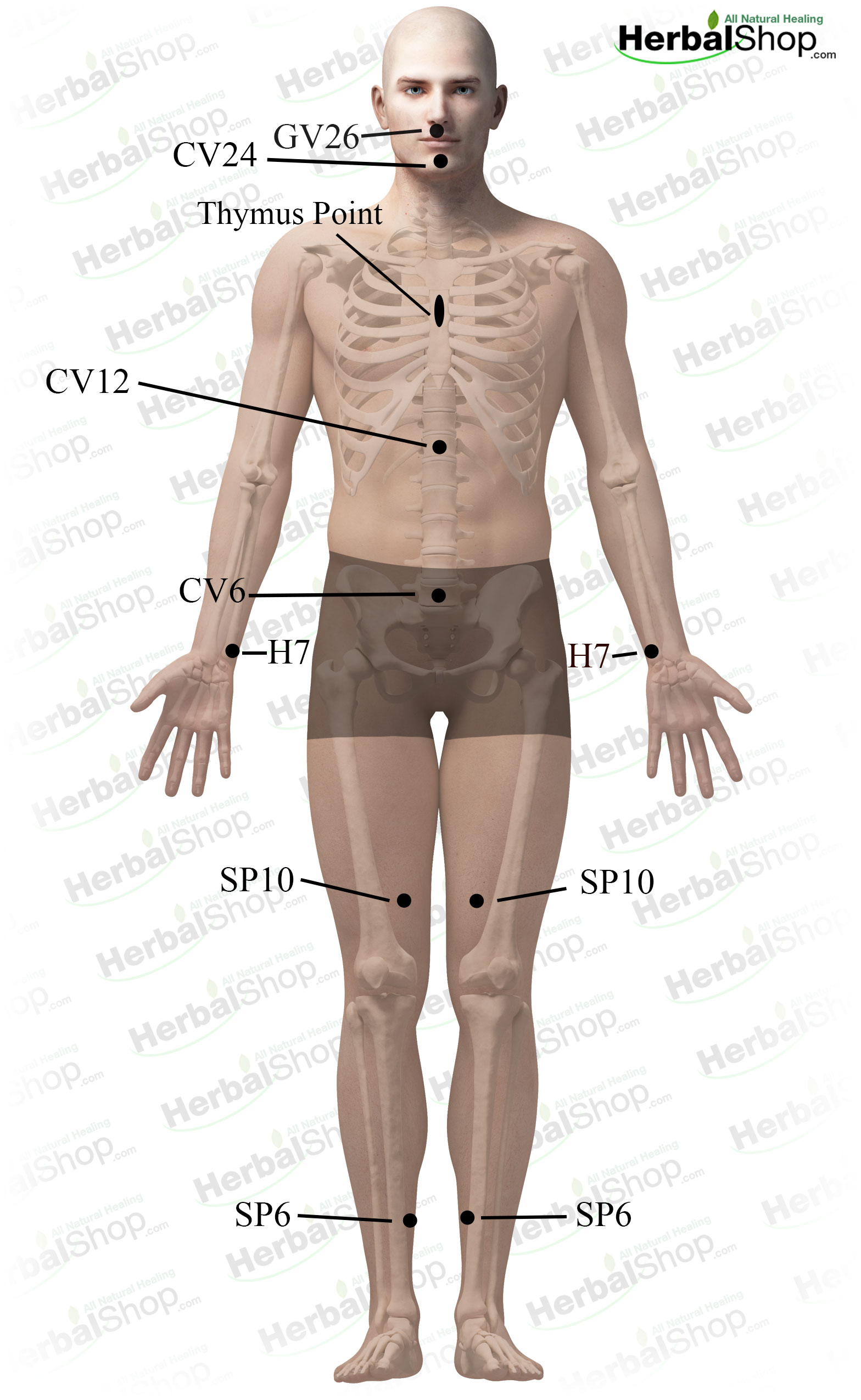 These are the acupressure points for dryness of the mouth. Working on these points can help you get better faster. You do not have to use all of these points. Using just one or two of them whenever you have a free hand can be effective.
Acupressure Point CV24 — Cheng Jiang
Chinese Name: 承漿
Location: in the depression in the center of the mentolabial groove.
Traditionally used for: facial swelling, swelling in the lower gums, toothache, salivation, drooling.
Acupressure Point GV26 — Ren Zhong
Chinese Name: 人中
Location: below the nose, a little above the midpoint of the philtrum. in the hollow between the upper lip and the nose.
Traditionally used for: swelling of the face, low vitality, chest pains, middle and lower back aches, spasms of the lower back, face lift point.
Acupressure Point SP6 — San Yin Jiao
Chinese Name: 三陰交
Location: On the inside surface of the leg, four fingers-width above the inner anklebone.
Traditionally used for: balancing point, abdominal distention, loose stools with undigested food, irregular menstruation, uterine bleeding, amenorrhea, low mood, chronic fatigue, regulate hormone function, low sexual desire in men and women, pain in the external genitalia, warts, hemorrhoids, varicose veins, insomnia, PMS, hot flashes, cold limbs.
Acupressure Point SP10 — Xue Hai
Chinese Name: 隱白
Location: when the knee is flexed, 3 finger width above the superior border of the patella, on the medial side of the thigh. Feel for pain or tenderness at the spot.
Traditionally used for: uterine bleeding, irregular menstruation, painful menstrual periods, premenstrual symptoms, absence of periods in fertile women without pregnancy, skin disorders, eczema, hives, sores in the mouth, cold sores, sea food poisonng, acne, boils, carbuncles, furuncles etc. On the skin, anywhere in the body, pain in the knee, pain in the medial part of the thigh.
Acupressure Point H7 — Shen Men
Chinese Name: 神門
Location: medial side (ulnar) of the transverse crease of the wrist.
Traditionally used for: chest pain, night sweat, spontaneous sweating, stage fright, phobias, nervousness (massage this point before interviews, speeches, wedding, exams, flying etc .) Irritability, poor memory, promote mental clarity, promote retention of knowledge in the brain (good for students to massage this point five minutes before beginning study to prepare for exams etc, ), chest palpitation, insomnia, nightmares, excessive dreaming, to mend broken heart, emotional stagnation, unable to cry.
Acupressure Point CV12 — Zhong Wan
Chinese Name: 中脘
Location: midway between the belly button and the bottom of the breastbone. On the midline of the abdomen, 5 finger width above the belly button.
Traditionally used for: acute abdominal pain, pain due to overeating, gastric pain, sour stomach, belching, regurgitation, vomiting, diarrhea, dysentery, distention of the abdomen due to flatulence, hiatal hernia.
Acupressure Point CV6 — Qi Hai
Chinese Name: 氣海
Location: on the midline of the abdomen, two finger width below the belly button.
Traditionally used for: balance the energy, abdominal pain, nocturnal emission, uterine bleeding, irregular menstruation, hernia, asthma, abdominal pain, incontinence of urine, diarrhea, constipation, abdominal distention, edema.
Acupressure Point CV17 — Dan Zhong
Chinese Name: 膻中
Location: on the midline of the breastbone, between the nipples, level with the 4th intercostal space. in the center of the breastbone, midway between nipples.
Traditionally used for: asthma, poor energy circulation, hiccup, pain in the chest, lactation deficiency, point to balance the energy.
Caution: You should consult with a healthcare professional before practicing Acupressure or starting any diet, exercise, Chinese herbs or other supplementation programs.
Acupressure is self-care, not a replacement for diagnosis or treatment. Stop if you feel sharp pain, numbness or dizziness. Pregnant or trying to conceive? Skip LI4, SP6, GB21, BL60 and BL67 unless your practitioner directs it. Get medical care first for chest pain, sudden weakness, fainting, heavy bleeding, or a high fever.
