


Blog
Acupressure for a Calmer Relationship With Food

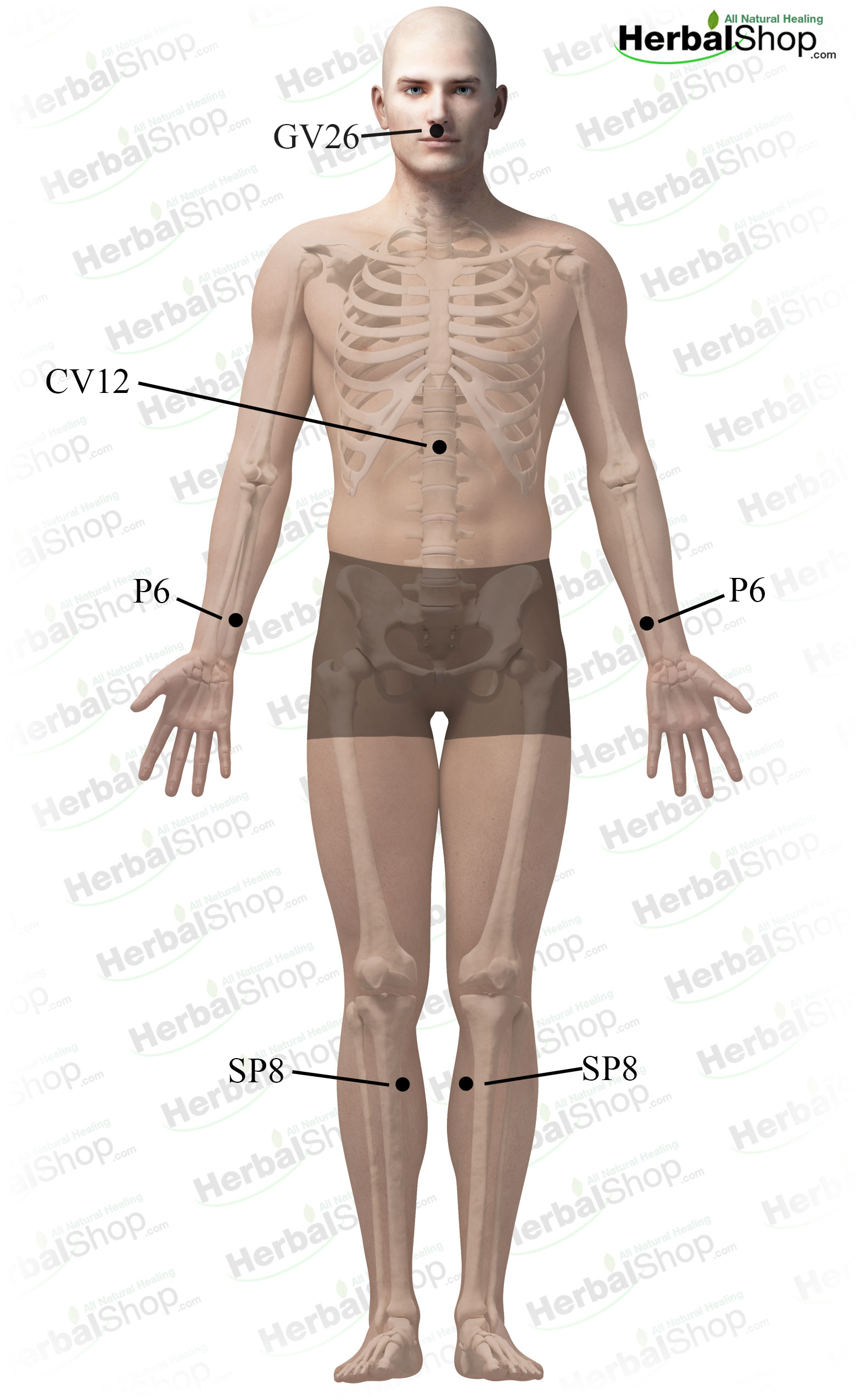
Here are the acupressure points traditionally used for a calmer relationship with food. Use gentle, regular pressure, and give it time. You do not have to use all of these points. Using just one or two of them whenever you have a free hand can be effective.
Acupressure Point SP8 — Di Ji
Chinese Name: 地機
Location: 3 body inches below sp 9, on the medial border of the tibia.
Traditionally used for: anorexia, bulimia, neurotic vomiting, abdominal distention, dysentery, severe uterine bleeding, severe uterine cramps, abdominal pain, diarrhea, edema, difficulty in urination.
Acupressure Point CV12 — Zhong Wan
Chinese Name: 中脘
Location: midway between the belly button and the bottom of the breastbone. On the midline of the abdomen, 5 finger width above the belly button.
Traditionally used for: acute abdominal pain, pain due to overeating, gastric pain, sour stomach, belching, regurgitation, vomiting, diarrhea, dysentery, distention of the abdomen due to flatulence, hiatal hernia.
Acupressure Point P6 — Nei Guan
Chinese Name: 內關
Location: three finger width above the wrist crease on the palmar side.
Traditionally used for: palpitation, vomiting, chest pains-emotional and physical, nausea, to decrease appetite, to calm down, decrease panic attacks, to stop smoking, addictions to alcohol, food and drugs, poor memory, to promote yawning.
Caution: You should consult with a healthcare professional before practicing Acupressure or starting any diet, exercise, Chinese herbs or other supplementation programs.
Acupressure is self-care, not a replacement for diagnosis or treatment. Stop if you feel sharp pain, numbness or dizziness. Pregnant or trying to conceive? Skip LI4, SP6, GB21, BL60 and BL67 unless your practitioner directs it. Get medical care first for chest pain, sudden weakness, fainting, heavy bleeding, or a high fever.
